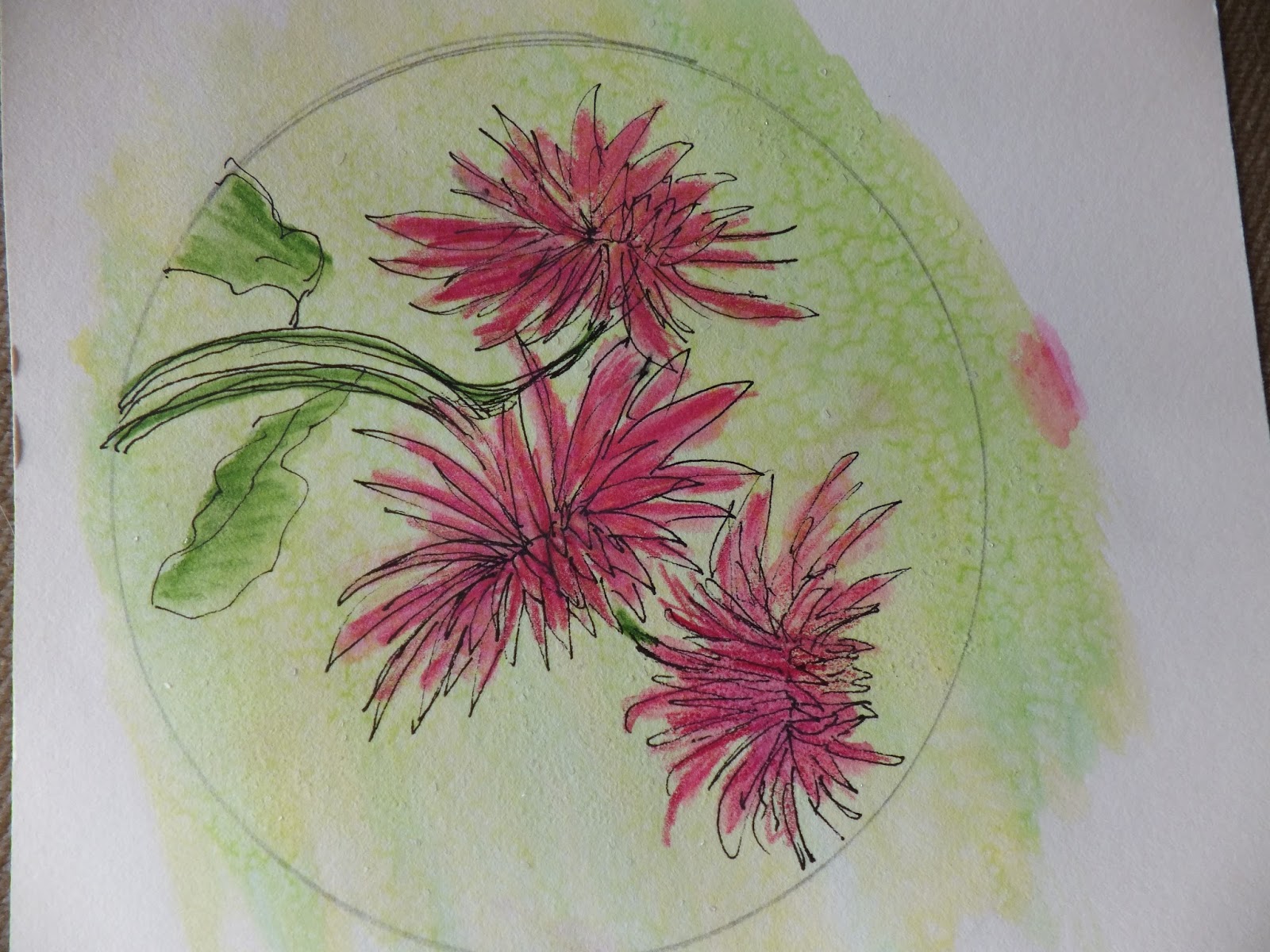
Showing posts with label Findhorn. Show all posts

Friday, February 27, 2015

Spinning back into my heart’s song - Lent 2015

2015 BEMS First Week of Lent
“It is only with the heart that you can see fully: what is essential is invisible to the eyes.” ~ Antoine de Saint-Exupery

“The best and most beautiful things in the world cannot be seen or even touched. They must be felt with the heart.” ~ Helen Keller

“Whosesoever you go, go with all your heart.” ~ Confucius


Sometimes I find it hard to remember the language of my heart.  My ears get filled with wax and I can’t hear my unique lyrics that I’m supposed to be singing into the universal song.  When this happens, I find myself being swept away by social injustices, and instead of trying to find peaceful resolution or trying to be empathetic towards the other side’s point of view; I’m angry.  The lyrics I sing clash with the ones I’m supposed to be singing about love.

It is Lenten season again.   I gave ‘giving up’ a long time ago.  I found this practice not useful in redirecting my heart down the right path.  For me, Easter and Spring are about re-birth, composting the old into something new.  Giving up chocolate, turning off the TV or becoming a vegetarian doesn’t seem to affect how I react to life’s crises or challenges.  This type of practice doesn’t unplug the wax in my ears and it sure doesn’t help me hear Motherfather Spirit any better.


This Lenten season (2015) I have chosen to get back to knowing those words on my heart.  The ones Motherfather Spirit wrote before I was born.  I want to remember those words that are to inspire me in become a better person through my actions.  Those words that make me empathetic towards others and those words that sing what is really important.   I want to get my heart back on track.  This is the re-birth I am looking for. 


I’ve been inspired this year three groups 1) Wild Woman Project – Wild Heart Wishes Meditation (February 2015) 2) Abby of the Arts - Holy Disorder of Dancing Monks, and 3) Findhorn Inspiration website.

Serenity (O Magnum Mysterium) - Ola Gjeilo - this music makes me very contemplative.  


Spinning back into my heart’s song: A daily ritual during Lent:


Materials Needed:

  • Paper with a spiral design or you can make your own. 
  • 40 plus Premade circles.  I made mine tracing quarters onto paper.  You can make yours bigger or smaller. 
  • Magic markers, pencils, ink pens
  • Glue or paste
  • Scissors
  • Small votive candle
  • Angel cards or Findhorn Daily Inspiration that includes an Angle Card or opening spiritual writing and identifying on word describing its message.
  • Journal

2015 BEMS - Openness
Directions

  • Light the candle and open your heart.
  • Pull an angle card and read it.  Say the word out loud.  Write down in your journal what you think this word means spiritually or why it should be written on your heart.
  • Next, read the word again.  Say the word out loud.   Ask for guidance from Motherfather Spirit.  Meditate on the word.  Example: Open   These are the types of questions I ask myself: 1) What does being open mean to me as a spiritual being?  How do I show others that I’m open?   How do I react to hearing something new – open or closed?  (NOTE:  The CCWWW way is different for each of us.  You have equally interesting questions to ask yourself.)  Allow some time to journal on this word. 
  • Contemplate what the word means to you in a symbol.  Doodle or draw in your journal.
  • Now, reflecting back on your journal, draw or write something that will remind you of this word in one of the pre-made circles.  Color it in.  (NOTE:  A CCWWW doesn’t judge their art against famous artists. This is a spiritual art and speaks from your heart.)
  • Cut out the circle and paste it on the spiral path.
  • Thank Motherfather Spirit for giving you this message about your heart.  Extinguish the candle. 
  • I tend to do this ritual in the morning and carry the small circle around.  The circle reminds me of the word that is etched on my heart.  In the evening I glue it onto the spiral. 


Friday, March 22, 2013

Forsythia – let there be flowering

BEMS@Copywrite
Maker's Moon - What wants to be conceived/born/shaped/made from our own minds/hearts/loins/hands? - CAYA Moon Question


"Forsythia is pure joy.  There is not an ounce, not a glimmer of saddness or even knowledge in forsythia.  Pure, undiluted, untouched joy."  ~ Anne Morrow Lindberg


I woke up today and the weather guy was droning on about “weekend of snow.”   There is a nice thin layer of cake frosting covering my car windshield and if this was January, I’d be smiling, but not so much now in March.  Then my son looked out the window and groaned:  “You’ve got to be kidding.” 
This past week I crunched across the community garden to our plot to bless it.  When I dug in to plant my egg, I quickly discovered that the top soil is still pretty much frozen.  This is very different from last year when we were having sweatshirt weather and the weeds were already up. 
My Grandmother use to say:  “Three more snow falls after the forsythia bloom.”  I went to where my Forsythia are and and and …. No green, no green buds only twigs sticking up out the ground.  Disappointed I tramped back into the house.  Yes, the robins are singing and the rain sometimes smells like spring and the crocuses and snowdrops are blooming, and the trees all appear ready with their buds, but not the forsythia .  Ohio this year is having a traditional winter season.
I admit.  I was spoiled by last year’s early spring weather that started in February. 
As a CCWWW, I have a love of nature and a passion for the wild and elemental.  These are a reminder that all creation is a gift from the divine.  These are a reminder that I’m just one piece that is interconnected.  I'm longing to lay in the grass and watch the summer wind blow the leaves. 
~#~
Let there be new flowering

let there be new flowering
in the fields let the fields
turn mellow for the men
let the men keep tender
through the time let the time
be wrested from the war
let the war be won
let love be
at the end
 
~#~
Potential tomato plants
Part of my practice as a CCWWW is growing my own vegetables and herbs. It is having a relationship with the devias or spirits of the garden and plants. My garden is a special place were we can meet. It is a place where I have learned many things that are magical.  It is in the garden that I learned about the tomato love spell.
Tomatoes are relatively easy to grow: sun, light, water and dirt.  And, it ceases to amazes me that some people have never seen a tomato plant growing in a garden.  These same people have told me they have never felt their fuzzy vines or smelled their distinct fragrance when brushed against.  They have never taken a bite out of a sun riped tomato.  They haven't held their tiny seeds in their hand.  (Maybe this is what intimidates people from growing them?)
I want to make sure we're all on the same page.  In Ohio, you don’t get tomatoes off the vine from your garden until end of June (maybe) July and August definitely.   It takes about 40-50 days to get tomatoes ripened off the vine according to the package and Ohio Cooperative Extension.  It also takes a specific type of weather – hot during the day and cooler during the evening. 
Tomatoes are part of a big family of plants known scientifically as Solanaceae or to gardeners the nightshade family.    Below are some of the cousins, and as in all families some are good to have around (edible) and some are toxic.
Mandragora (mandrake), Atropa belladonna (deadly nightshade), Lycium barbarum (wolfberry), Physalis philadelphica (tomatillo) , Physalis peruviana (Cape gooseberry flower), Capsicum (chili pepper, bell pepper), Solanum (potato, tomato, eggplant), Nicotiana (tobacco), and Petunia
If you are thinking of “making” your own tomato plants - you need about 8 weeks to get those seeds ready.  I usually count 8 weeks back from US Mother’s Day – so now is the time for Central Ohians.  Mother’s Day Weekend has been usually our last known heavy frost day.  Tomato plants are annuals here in Ohio and don’t like the cold.    Here's a map of the world for planting times.
You start the seeds in plastic trays purchased from your local garden shop – or you can reuse the plastic lettuce containers and cardboard egg cartons.  You fill the trays (egg cartons) with dampened sterile soil mix. And plant the seeds.  I’m using a heirloom mix this year.  The seed containers should be placed in a southern facing window.  What is nice about the plastic lettuce containers is that they have a lid.  The egg carton can be cut down to fit the lettuce container and the lid creates a mini greenhouse that is waterproof.     

Before planting the seeds I thank the soil, thank the water, thank the sun and thank the seeds for the tomatoes that will help feed my family.

To be continued……..

Sunday, March 17, 2013

Friendship – starting with yourself

Girl Looking in The Mirror by Pierre-Auguste Renoir (1912)
Maker's Moon - What wants to be conceived/born/shaped/made from our own minds/hearts/loins/hands? - CAYA Moon Question

“We are not humans having spiritual experiences, we are spiritual beings having human experiences.” ~ Teilhard de Chardin

 
“Friendship is born at that moment when one person says to another: "What! You too? I thought I was the only one.” ~ C.S. Lewis

“A friend is one that knows you as you are, understands where you have been, accepts what you have become, and still, gently allows you to grow.” ~ William Shakespeare


To be a friend is hard work.  To be friends with yourself is even harder work.  I believe I heard this from my creative journaling teacher Nettie.  If not, it would be something she would say. 

 
This week I’ve started this blog entry over twice, because the theme “friendship with yourself” kept coming up.  You might say I got zapped by it from 6 different places this week:  Hildegard mandalaclass, 21 Day Meditation Challenge, Wild Woman Project, Findhorn Inspirational message, my New Moon Goddess Card of the month, and a fragment from a Hallmark Channel Movie due to channel surfing between basketball games.  Since I’m a firm believer in the law of synchronicity; I scraped the gardening piece for this topic. 

 
When I talk about being a friend to yourself, I’m not talking about being a narcissist.  That type of self-love in which one believes that they’re better than others and have a desire to tear others down in order to feel successful.  No, the one I’m talking about is giving yourself the same compassion that you give to others you are deeply in love with.  This was the message I kept getting zapped with.

 
~#~
 
Audacity: 1.bold courage; daring   2.shameless or brazen boldness; insolence ~ Webster New College Dictionary.

~#~

It has been my experience that the foundation of magic is belief.  You must believe in order to create or make something.  And, you must continue to believe all the way to the end.  More often than not, we find that our creative and magical endeavors become prey to sabotage by our own inner voices.  These voices have a way of squashing our passion and what ends up happening is the majority of our spells, creations and ideas our sitting in the basement in a box unfinished.

In talking to friends this week about the inner voices, we all came to the same conclusion.  We’d never say the things our inner voices say to someone that we love.  And, we’d probably wouldn’t say this to someone we don’t like.   My voices revolve around not being able to complete projects, perfectionism and fear that I’ll be rejected, self-judgment, education lacking by not having taken the right course work or involved with the right project.  These all seem to twist and haggle inside my head to the point I often stop.  Bottom line, I’d never say these things to a friend; I’d do the opposite.  I’d cheer them on.

March’s New Moon Wild Woman Project theme focused on having the audacity or courage to love ourselves.  We used one of Louise Hay’s mirror exercises.   The exercise asks us to call to mind a person that we deeply love.  We were to imagine looking in their eyes with compassion.  The last part of the exercise was to look into the mirror and with the same look of compassion see ourselves.  When I did this, my heart was crushed because I have never done this.  I have never looked into my eyes with that same look of charity. 

Kristin Neff, Ph.D. writes in her book about how self-esteem and self-compassion are intertwined.  Her research showed that a person with high self-esteem didn’t berate themselves when they were failing.  They did the opposite, they were kind to themselves.  These people in her research were able to embrace themselves with all their flaws and outperformed the opposite group.  Neff describes the science behind this.  When we berate ourselves with our inner critics, the flight and fight hormones are released.  Despite what our culture says, these hormones don’t drive us to the finish line they make us angry and cripple us from moving forward.  When we treat ourselves with kindness and sympathy, endorphins are released and we feel motivated to try again.  The endorphins make us feel good. 

Neff also found that the more we were able to keep our hearts opened for ourselves, the more we have available to give others and pursue our creativity.  She states that when the critics pop up 1) we should face them and tell them to soften.  Then provide kind, empathetic words to ourselves.  2) To look at the full picture and ask: how am I the same as others?  (e.g., Yes, I haven’t gotten this spell down pat but others have been here like me.)  3) Practice mindfulness and being in the present. 

~#~
 
Ho’oponopono
Hawaiian Prayer
I’m sorry.
Please forgive me.
Thank you, I love you.

This prayer was shared by one of my mandala classmates when I began describing how I was critical of my mandalas.  I was wishing to soften my judgment.  This is the prayer she tells herself when her inner critics begin to talk. 

Friday, February 22, 2013

Designing a Garden

BEMS@2013
Silent Moon - How can we find silent time to restore and regenerate our enthusiasm for our lives/work/relationships? ~ CAYA's Full MoonQuestions.

In the spring, at the end of the day, you should smell like dirt. ~ Margaret Atwood, Bluebeard's Egg

Love which planted a glorious garden redolent with precious herbs and noble flowers--roses and lilies--which breathed forth a wondrous fragrance… ~ Hildegard of Bingen letter to the Monk Guibert, 1176


It’s getting close to spring.  I can see the days getting longer.  The sun is above the trees when I drive home after work.  I’m anxious for that change in the rain smell.  I’ve been getting e-mails daily from all the seed catalogues enticing me with 2 for 1 deals.  And, I paid my fee for my community garden plot.

Last night my Gurney’s Seed Catalogue came in the mail.  I flipped through it relining on the couch.  The cover shows three bright photos: Ka-Bluey Blueberries, Big Beef Tomatoes and Biggie Sweet Chilies.  I’m pulled into the size and redness of that tomato.  My mouth waters as I imagine its July sun sweetness – right off the vine - sliced between a baguette with fresh basil, mozzarella cheese, salt and fresh cracked pepper.  My finger itches to press its seeds into the dirt.
~#~

Hildegard of Bingen (1098-1179) is considered to be a master gardener and herbalist. Her two treatises on medicine and natural history were widely read even today and probably have influenced modern pharmacology.  In her Causae et Curae, she catalogue over 47 known diseases during her time period (i.e., cause, symptom and treatment).  The treaty also provided lists of 300 medicinal plants and their use in treatment. 

The abbey Hildegard was prioress would have followed the Benedictine tradition by being self-sufficient. There would have been a vegetable/kitchen garden, farm fields, orchard, and physic garden.  Her medieval kitchen garden would have included: turnips, parsnips, onions, leeks, various legumes, mint, basil, wormwood, borage, mugwort, nettle and melons.  Whereas the physic garden would have traditionally grown sage, rue, aloe, rosemary, southernwood, poppy, mint and pennyroyal, parsley, gladioli and marigolds.


Hildegard was also a woman ahead of her time.  She adopted a way of eating that was based on color.  She believed and wrote about how foods offered specific viriditas associated with their colors.  She encouraged eating a multi-colored food diet as a way to promote well-being - mentally, physically and spiritually.  Today her “diet” for healthy living is better known as the Rainbow Diet, the Chakra Diet or My Plate 

Hildegard held the emerald colored foods above all.  Today we know that these dark green leafy vegetables are the powerhouse of the vegetable.  They are rich in minerals (i.e., iron, calcium, potassium and magnesium) and the B vitamins.  It is written the fennel was her favorite green colored food.  The herb is known to help with digestion and improve sight.  Eaten it tastes a little like anise.
 
~#~
"... Only gradually did I discover what the mandala really is: 'Formation, Transformation, Eternal Mind's eternal creation' (Faust, II). And that is the self, the wholeness of the personality, which if all goes well is harmonious, but which cannot tolerate self-deceptions." ~ C. G. Jung
~#~
BEMS @ 2013
My class on Hildegard also includes learning to draw mandalas.  Up front, I’m not an experienced mandala drawer and consider at the most an amateur mandala coloring in the lines person.  

What I’ve learn so far is that some people consider mandala is like a garden temple or sacred space.   In many traditions it is used as a tool where one can use for meditation or trance.   It can assist the meditator on their journey for inward towards their sacred center for healing and commune with the Divine one.

Each day I focus on one of Hildegard’s writings and let my creative side take over. 

During my silent times of coloring, cutting and pasting, I’ve been inspired to move away from the boxy 9”x9” squares in my community garden to circles and fluid lines.  My research landed me on sites discussing mandala and keyhole garden structures.  These kitchen garden structures are non-linear and fluid.  They are considered more ecological and kinder to the soil.  Additionally, the design is said to be more pleasing to the eye - meditative. I can picture the rectangle I'm renting to look more like a mitochondria - the powerhouse organelle of our cells who's DNA is from our mothers.   

My mind contemplates the possibilities and my finger itches to press seeds into soil.
~#~

Recipe for rainbow eating – inspired by Martha Stewart and BonAppetit

Blood Orange, Beet, and Fennel Viriditas Salad
Ingredients

2 medium 1 red and 1 yellow beets, tops trimmed and roasted and peeled and sliced
3 blood oranges, peel, pith cut off and sliced into segments  (Make sure you catch the juice)
1/2 small fennel bulb, very thinly sliced crosswise on a mandoline
1/4 red onion, very thinly sliced on a mandoline
Small container of greens
2 Tbsp orange juice
2 Tbsp of olive oil
1 Tbsp of balsamic vinegar
1 small container of feta crumbled

Into salad bowl, greens then beets, fennel, orange, onions.  Mix orange juice, olive oil, and vinegar together and dress the salad.  Add feta cheese and serve.

Saturday, March 17, 2012

Findhorn: a garden based on teamwork

March 15, 2012 Too Soon?
“I am a member of a team, and I rely on the team, I defer to it and sacrifice for it, because the team, not the individual, is the ultimate champion.” Mia Hamm, US Soccer Player

“One piece of log creates a small fire, adequate to warm you up, add just a few more pieces to blast an immense bonfire, large enough to warm up your entire circle of friends; needless to say that individuality counts but team work dynamites.” Master Jin Kwon, South Korean Martial Arts Master

“I love to hear a choir. I love the humanity... to see the faces of real people devoting themselves to a piece of music. I like the teamwork. It makes me feel optimistic about the human race when I see them cooperating like that.” Paul McCarthy


~#~

I’m enjoying the 70 F weather in Central Ohio.  My daffodils are blooming and the fruit trees around town are bursting open their pink, white and magenta colored petals.  I’ve got my shorts out and riding my bike.  But, in the back of my heart there is a dark curtain with worry.

As a gardener, we are at the minimum 2-3 weeks ahead of planting schedule.  Our winter here was abnormal.  We missed having at least two weeks of deep freeze that helps decrease the insect population.  What does this all mean?
  • If we get a freezing rain now it will wipe out our apple, cherry and peach crops.  For consumers, this means an increase in prices.
  • Without the freeze over the winter we will have a larger insect population who like us humans, will be hungry for things that are green. 
  • If it is 70F now, what will this mean in July and August?  Will the temperatures be higher?
  • The fosthyia are blooming.  Will we still get 3 more snows? 
A gardener thinks of these things while planting their onions and peas.

 ~#~

I’ve been a gardener for many years (Refer to ‘Body’ article). Recapping, my Dad had my siblings out there in the garden planting, weeding and picking when I was in Elementary School. His type of gardening was organic square foot gardening. In a nutshell, I learned that tomato plants can grow in a 1’x1’ square and bean plants are grown 9 plants per 1’ square. All organic plant byproducts otherwise known as kitchen scraps went into a compost pile. The compost was spread out in the spring and rototilled in before we planted on Memorial Day Weekend (Northern Ohio). Dad didn’t use any white stuff on his plants to keep the bugs away. He used marigolds and nasturtiums and the slugs were controlled with pans of beer.

Diane, owner of Pearls of Wisdom (my favorite Columbus metaphysical bookstore), carries many books on gardening. Many of the books are centered on healthy nutrition by growing your own, the witches gardening by the moon, and on herbalism and native plants for healing. One book I pulled off the shelf in the late 1980s (To Hear the Angels Sing by Dorothy Maclean) was about Findhorn.
<><><><> <><><><> <><><><>
Findhorn original garden
Findhorn is located in Northern Scotland. Briefly, the founders, Peter and Eileen Caddy and Dorothy Maclean began communicating with the Garden Devas based on a message received by the Spirit of God to do so. This part Scotland isn’t the best area to grow with sandy soil, winds and the dry cool climate with limited waterfall. However, they followed through with God’s message and began communicating with the Devas daily. The first year they did this resulted in an abundance of food. What I remember from the book was their ability to grow a 40 lbs cabbage without the use of Miracle Grow. Findhorn is yearly visited by international visitors who all come to see the gardens. Findhorn is a member of IONESCO and is recognized as a Non-Governmental Organization, or NGO, by the United Nations. It is one of those ‘earthy wow sites’ I hope to get to in my lifetime.

Maclean named the spirits Devas from the Sanskrit name for light beings.   People have called them angels, fairies or spirits.  How do I picture them?  I think of them as unseen entities who've always been there.  We humans have either forgotten or have never learned about them.  What I do believe is that they should be treated with respect and not be thought of as “slaves to do our bidding.” 

This idea of working with the Devas intrigued me. Getting started was felt weird and uneasy. I was never taught to pray for garden spirits or honor the garden spirits. Praying after the harvest at suppertime yes, but never in the beginning.  Let alone, did my Dad ever ask where ‘they’ would like the tomatoes planted or what type of fertilizer they’d felt was necessary to grow the plant. My first hurdle was to overcome my fear that I’d be a subject of a family intervention to the state psych hospital because of my beliefs in unseen fairy tale ‘wee folks.’ (T shrugged and believes.)  The rest of the community gardeners?  Don't ask.  Everyone does their garden different.

Once I got over my fear, I’ve learned working with the Devas is very much like the skills needed to work in the office: team building skills. The skills I’ve easily used on many projects for my job have now been transferred into the garden setting. Basically, we (Devas and I) are pooling our areas of expertise and talents to create the garden beneficial to both. And, for the past 5 years I’ve moved from my beds around my house and started working with them in my community garden plot.

Shared mission and goals built on trust
First, you have to believe in Devas. How I would best describe Devas are elementals, spirits, fairies, angles of the garden. Believing they are there is an act of faith on your part. They don’t seem to have any problems. It’s us humans who rely too much on our sense of sight.

Second, you have to be up front as possible. I know that the Deva’s are concerned about creating the best energy for the health of the landscape. My goal is for growing the best vegies for my family. I do care about their cause, but growing vegies helps my family reduce our $$ at the groceries. I guess the bottom line is how we can help each other in this mission.

Communication
My communication with them starts on the Spring Equinox. During my ritual at the garden, I have a plan listing the types of vegies I plan on growing the upcoming season. I bless the soil and ask for their help back at my home for plant placement. I communicate via my pendulum by asking yes and no questions. Example: Should a tomato plant be planted in this square? How often I should water each week. How often to fertilize?

I’m very clear to the Devas that my family likes certain vegies and I’m open to growing different types of flowers to help their cause. I’m also clear that they get to drive where things are planted. And, I drive the format – square foot gardening. If they say put a tomato in every 9’x9’ square – okay I will put a tomato plant in every 9’x9’ square.

Collaboration with participation
My main collaboration effort has been around bugs. Specifically, our collaboration has been around the beetles that like my bean. They like my beans because I don’t use the white powdery stuff like other gardeners. Through my collaboration with the Devas I’ve been able negotiate one row being just for the beetles and I get the rest. This collaboration has made me see the beetles as just trying to survive too. In other words, we all have a place on the earth.

Start Asking Activity:

Materials Needed: Journal and pen
Sit alone next to your houseplants or outside next to your garden.  Ground yourself.  Ask:  Do need anything that could help out the garden?  Should a plant be moved?  Should there be any crystals?  Any type of fertilizer needed to help out?  Then listen.  Journal your response.

Resources 
Maclean, Dorothy. To Hear the Angels Sing. Elgin, IL: Lorain Press, 1980.
Wright, Michaelle Small. Perelandra Garden Workbook.  Perelandra. 1987.

Youtube video on Findhorn  Interview with Eileen Caddy and Dorothy Maclean
Miller, Danny. The Findhorn Film. Dannymillerfilm 29, Oct. 2009. Web. 17, March. 2012.  http://www.youtube.com/watch?v=QT4xwLwxi9o