Showing posts with label A better world. Show all posts

Saturday, October 20, 2018

Doing My Part with Small Steps

Elizabeth Boehm (1843-1914) Postcard reads People stand for
different things I stand with my friend


Ours is not the task of fixing the entire world at once, but of stretching out to mend the part of the world that is within our reach.” ~ Clarissa Pinkola Estes

Go out in the woods, go out. If you don't go out in the woods nothing will ever happen and your life will never begin.” ~  Clarissa Pinkola Estés, Women Who Run With the Wolves: Myths and Stories of the Wild Woman Archetype


One of the first feminist spirituality books I read was by Clarissa Pinkola Estes: Women who Run With the Wolves. It was a book that was flying off the shelf and several coworkers were reading it during lunch. The book attracted me, because Estes used myth and fairy tales (who doesn’t like myth and fairy tales). The book was an awakening for me. It caused me to really question who I was as a woman back in 1992.

In her essay for Awakin.org. Estes challenges us to fix what we can in our broken world. Today I find myself feeling overwhelmed with an increasing laundry list: environment, economy, housing, food scarcity… However, Estes encourages us to do small things like: showing up for our children’s events; meal training it for a friend who is shut in; and eating meatless Mondays. Yes, she acknowledges that there are really big problems. But, we need to focus on what “I” the individual can do. One example is cleaning up the litter problem in your neighborhood. It is a daunting task to do all by yourself, but you can keep your lawn tidy. Her key message is to show up and to keep showing up.

My dad walks about three miles a day every morning. Each day he takes along a trash bag and picks up the litter along his path. He has been doing this before it became a Swedish trend called Plogging. Dad follows John Muir hiker’s creed of “leaving nothing but footprints.” My point is Dad is doing what he can on his morning walks; and he keeps showing up.

Estes discusses the importance of showing up. We are in relationship with each other. By doing what we can, our soul’s light inspires others. It is easy to show up during “golden times,” she writes. But, we are even more needed during the stormy times. Your light inspires and helps another.

###

A Prayer

By Clarissa Pinkola Estés, The Faithful Gardener: A Wise Tale About That Which Can Never Die

Refuse to fall down
If you cannot refuse to fall down,
refuse to stay down.
If you cannot refuse to stay down,
lift your heart toward heaven,
and like a hungry beggar,
ask that it be filled.
You may be pushed down.
You may be kept from rising.
But no one can keep you from lifting your heart
toward heaven
only you.
It is in the middle of misery
that so much becomes clear.
The one who says nothing good
came of this,
is not yet listening.

Clarissa Pinkola Estes
###

I keep thinking Estes is all about kindness shared.  I look on the news and see on my Facebook feed pictures of angry people and videos who care only about winning at any cost.   I have to ask myself where is compassion and empathy for another? When I have asked a person who displays this type of behavior; they are demeaning and condescending to me. I find this ends up as a no win solution. Maybe that's the point it is a no win solution. And, if I really care about the issue I need to find other ways around it that doesn't involves them. These are the small steps I need to keep showing up for.


ARTUAL: Questions to journal about:


What do I have control over?
Where can I make a difference?
Where can I make an impact and not get burnt out?
What are my values for living?
How can I stay true to my values with my beloveds?


Resource:


13 Reasons Why You Should Read “Women Who Run With the Wolves” Instead by Kami Leon (Cliff notes of the book)

Pikola Estes, Clarissa (2018) We were Made for these times. The Heart of the Matter. 

Saturday, October 6, 2018

#Believe prayers


"To be rendered powerless does not destroy your humanity. Your resilience is your humanity. The only people who lose their humanity are those who believe they have the right to render another human being powerless. They are the weak. To yield and not break, that is incredible strength." ~ Hanna Gadsby, “Nanette”


“I can be changed by what happens to me. But I refuse to be reduced by it.” ~ Maya Angelou


This past week really pulled me down. However, I chose Shiloh Sophia’s call and put prayers into my art with each paint stroke (See above). I put green and copper into my year long painting. My prayers were for healing survivors, healing perpetrators, healing for those who believe and stand with survivors, and those who continue to victim blame. I prayed for a society in my lifetime that is free of unhealthy behaviors that hurt another.

I work in the field of domestic and sexual violence. The local, state and national hotlines have increased since Thursday. Survivors are calling about old wounds or new hurts. Men are calling asking: what can they do? I’ve been sharing a starting list from Men Can Stop Rape. Futures without Violence is another good resource for both prevention and intervention. They have materials for different professions and different age groups. Their Starting Strong program has a checklist parents can take to their schools to look at policy and curriculums used to prevent bullying, sexual harassment and dating violence. If you work or volunteer with a youth serving organization, Stewards of Children offers a policy checklist and an on-line prevention training for adults to hold other adults accountable.

If you’re a friend or family member of a survivor - BELIEVE!!!! Share the national hotline. They are also there to support you as a friend or a caregiver.

RAINN - National Sexual Assault Hotline 1-800-656-HOPE.

If you still don’t know how to show support to a survivor. Check out Brene Brown’s video on what is empathy.

If you are a survivor - I am sorry this has happened to you. Your pain should not be mocked or laughed at nor should you be told “if it had been me I would of….” I am sorry.

There are professionals who are trauma trained and experienced in working with survivors. To get a listing contact your local rape crisis center. There are also other forms of trauma therapy available: yoga, theater, dance, singing, and art.

The Trough
by Judy Brown:
Read by Judy Brown. 


My ARTUAL this new moon…. Putting green and copper - healing brush strokes for the world.  

Monday, March 26, 2018

Demonstration, Marches, Cookie Making


The Women's March by Marietjie Henning (2014).  


“Colorful demonstrations and weekend marches are vital but alone are not powerful enough to stop wars. Wars will be stopped only when soldiers refuse to fight, when workers refuse to load weapons onto ships and aircraft, when people boycott the economic outposts of Empire that are strung across the globe. ” ― Arundhati Roy, Public Power in the Age of Empire


“Returning hate for hate multiplies hate, adding deeper darkness to a night already devoid of stars. Darkness cannot drive out darkness; only light can do that. Hate cannot drive out hate, only love can do that.” ― Martin Luther King Jr., Strength to Love


“There must exist a paradigm, a practical model for social change that includes an understanding of ways to transform consciousness that are linked to efforts to transform structures.” ― bell hooks, Killing Rage: Ending Racism


In her essay about Xi Wangmu, Max Dashu writes that the goddess was seen as a personal savior, protector, and healer. The common people would parade barefooted with drums and chants to plead for her help. "This goddess movement alarmed the gentry, and the Confucian historian presented it in a negative light. He warned the danger of rising yin: females and the peasantry stepping outside their place." As with many uprisings from the poor, the wealthy and aristocrats put the people back into their social order by not sharing power -- not sharing love. 

A privilege I have as a citizen of the U.S. is the right to "freedom of speech;" the "right of the people peaceably to assemble" and the right "to petition the (my) Government for a redress of grievances."  On Saturday, I walked with the youth of American to end this gun violence. (SEE U.S. Constitution and read it.)

Marches in the U.S. have long been used to plea for justice and bring awareness to a cause. Mary Harris "Mother" Jones, organized child factory workers in 1903 to march in front of city hall in Kensington, Pennsylvania. She had them wave their maimed fingers and hands up in the air for all to see.  The children were able to change the laws; no one under 16 could work.  On the eve of President Wilson's inauguration (1913) the suffragist held a parade in Washington, DC which lead to violence and hospitalizing over 200 people. The police stood and watched as this happened.  It was to be a "march in a spirit of protest against the present political organization of society, from which women are excluded." It was the press coverage of the violence against the women which would be the key.  These women acted non-violently and this gained support from the public for their cause: to be able to vote.  However, it would take additional public acts to get congress to ratify the 19th amendment in 1920.  In May of 1963, African American children took to the street to help end segregation.  The press covered their march showing dogs and firehoses blasting water at the youth.  The youth wanted to make a difference and were willing to make a sacrifice that would change the course of history.

Molly Pitcher at the Battle of Monmouth
lithograph, Library of Congress.
My first "political march" was my annual city parade.  My brothers and I dressed dramatizing the painting "Sprit of 1776."  The picture of Molly Pitcher was out of the question: 1) the cannon was unattainable and 2) three kids under the age of 13 rolling a cannon 2.5 miles along the parade route would be problematic.  I was assigned to play to flute, because that was what I played in my 7th grade band.    We were celebrating our countries 200th year birthday.  My siblings and I knew our family's history: our ancestor was an officer in the Revolutionary War and the War of 1812.  We were  demonstrating the need for the continued fight for our freedoms identified in the Constitution.  We were growing up in the thick of the Cold War.  However, in high school my teacher asked, "do you think the Soviet Children want the same thing too."  It made me stop and think.  In the late seventies, people shied away from marching for a cause in my city.  I found another way; I wrote my first letter to my senator.

My next march political march wouldn't be until the late eighties.  I pushed my friend M in his wheelchair in the PRIDE parade: a straight woman and her dying gay friend.  M had always wanted to march in a PRIDE parade.  He wanted to publically state he belongs without being oppressed and ridiculed for his sexual orientation.  M was concerned about my helping him be in the parade; but isn't that the definition of a friend?  Isn't this how you show love?  Since that march, I've participated in women's marches, anti-war marches and this weekend: the youth's March for Our Lives.  There is something about being with a crowd wanting a change to make the U.S. a better and safe place and place where love is acted on.

~~~


Written by will.i.am, apl.de.ap, Taboo, Justin Timberlake, Printz Board, Michael Fratantuno and George Pajon
Performed by The Black Eyed Peas

~~~

Bree Newsome 
At one of the local colleges this past week, I heard Bree Newsome talk about art and social justice.  Newsome, an artist, musician, and social activist, is known for climbing the flag pole in Charlotte, North Carolina to pull down the confederate flag.  Her act of civil disobedience followed the massacre of 9 African American's during a prayer meeting.  Newsome stated she was arrested along with a friend (white man), but her act also led to the flag being taken permanently down.  A key take-away from her lecture was everyone is responsible for making our world, our country a better and safer place to live.  Not everyone is called to put their lives on the line like Newman, but they are called to do something.  Newsome used an analogy.  The road to creating the beloved community is really a highway with many lanes.  Some are called to lay down their lives, others to write letters, others marchers, others creating posters and art, and others providing food and comfort for these activists.  You are only required to do something.


Monday, February 27, 2017

What are you for?

Infinity Mirror Room Phallis Field 1965. by Yayoi Kusama
"You can't save people. You can only love them." ~  Anais Nin

“Don't seek love externally, it's fleeting. Go beyond the ego and awaken the love that already exists within; it will encompass everyone and everything in your life; it will permeate your very being.” ~ Danielle Pierre

“A positive needs a negative to complete its cycle, as the Moon needs an embodiment of itself, the Sun, to complete the cycle of its illusory essence, the Earth. Now if the earth is in dire straits, is bombing the moon to discover whether water is ‘perceived’ in the natural stance of humans an intelligent move?” ~ Aainaa Ridtz


Binding Spell: are used to prevent someone or something from causing harm. They aren't the same as curses, where you inflict harm on another person. They are similar to, but slightly different from protection spells, which are meant to protect you from bad things occurring. (www.everythingunderthemoon.com)

Hex: 1) A spell or curse; 2) Brings bad luck (Webster)

A binding spell recipe is currently been shared on social media. (Here is an example of one) Personally, I feel binding has a place, but you have to be careful. CAUTION should be in the back of your mind whenever binding, hexing, and cursing. You must be aware the spell can come back to bite you in the bum. Another consideration is a higher power and the law of giving and receiving govern all spells: the good, the bad and the ugly. The higher power and the law always influence the net result and the results may not turn out as how you planned.

Another consideration is the person who is performing the spell. What is your frame of mind? Why are you doing this? Are you reacting or are you acting out of love for all humanity?  All good questions you should ask yourself.  

Reading and reflecting on the proposed spell, I’ve identified a problem. It appears to focuses on one individual. My analysis and gut reaction? I believe the problem is bigger than the identified individual who is the focus of the spell. I also believe this spell doesn’t get to the root of the “infection.” This spell doesn’t act like an antibiotic killing the root contagion.  It acts like more of a band-aid. 

Putting on my health hat, if we get down to the nitty-gritty of this issue, we all have been infected with the same disease that has infected the person identified in the spell. Think PANDEMIC. The difficulties with this acquired disease are each individual manifests the symptoms and signs differently. Personally, I wish bacteria, a chemical, or virus caused this disease. We could identify the source, create vaccines and/or other course of treatment. When an out-break occurs we would follow WHO’s international protocol to help stop the spread. We would also develop guidelines for prevention.

I wish I could say I’m free of the infection, but this is a lie. I
Lingering Dream by Yayoi Kusama
have biases and violent tendencies too (i.e., I like to thrust my imaginary sword for justice, and in my youth I liked to play hard on the soccer field, and have been known to yell and raise my voice at my children). I’ve grown up in a culture and society that rewards being King of the Mountain and kicking people down versus culture and society that rewards sharing and helping someone who is down. I have been exposed to the same infectious agent as the one who the spell is being directed.


Sure, I don’t do all the things that this person does. It takes a lot of work to keep my infection in check. I try daily to dismantle my prejudices and biases. I try to put out kindness and somedays I don’t have that energy. What really keeps my infection in check is my devotion to a world where all people feel like they are heard and belong. I am devoted to the beloved community that Martin Luther King, Jr. speaks about.   

Making Peace
By Denise Levertov

A voice from the dark called out,
             ‘The poets must give us
imagination of peace, to oust the intense, familiar
imagination of disaster. Peace, not only
the absence of war.’
                                   But peace, like a poem,
is not there ahead of itself,
can’t be imagined before it is made,
can’t be known except
in the words of its making,
grammar of justice,
syntax of mutual aid.
                                       A feeling towards it,
dimly sensing a rhythm, is all we have
until we begin to utter its metaphors,
learning them as we speak.
                                              A line of peace might appear
if we restructured the sentence our lives are making,
revoked its reaffirmation of profit and power,
questioned our needs, allowed
long pauses . . .
                        A cadence of peace might balance its weight
on that different fulcrum; peace, a presence,
an energy field more intense than war,
might pulse then,
stanza by stanza into the world,
each act of living
one of its words, each word
a vibration of light—facets
of the forming crystal.

Levertov, Denise. “Making Peace.” Breathing the Water. New York:New Directions Publishing Corporation, 1987.  


I've written about this before.  Our actions effect the things around us.  If we cut a tree down, we lose our relationship with the tree (CO2 to O2 relationship), shade, helper in soil erosion...  The way we treat other people effects our world. 

This is the time to really reflect on your personal ethics.  What do you stand for?  What are you devoted to?  This is your point of reference.  This is what you should be aligning your heart and mind to when you act. Your actions should be inspired by your devotion and not a reaction to the oppressive forces.     


Friday, February 10, 2017

Holes that need mending

Illustration for Little Mermaid by Asami Kiyokawa. 2007. Fabric
“For nothing is fixed, forever and forever and forever, it is not fixed; the earth is always shifting, the light is always changing, the sea does not cease to grind down rock. Generations do not cease to be born, and we are responsible to them because we are the only witnesses they have. The sea rises, the light fails, lovers cling to each other, and children cling to us. The moment we cease to hold each other, the sea engulfs us and the light goes out.” ― James Baldwin

“Sometimes that’s all it takes. Just one person to turn everything on its head. Remind you of the person you were.” ― Samantha Towle, Trouble

“You know, life fractures us all into little pieces. It harms us, but it's how we glue those fractures back together that make us stronger.” ― Carrie Jones, Entice


There seems to be a lot of things that need mending in my life, and I am not just talking about the loose buttons, ripped skirt hems, and snagged holes in my sweaters. My son’s used car’s engine is beyond repair. My butterfly bush needs pruning again due to an ice storm. Did I mention I have family relationships that need transformation after ten years of not speaking and a reckoning is coming soon due to a death of a favorite Uncle. Then, there is the living room walls need re-painted. Writing this list down, they all seem pretty restorable. (Okay not the car.)


Really what I am driving at is something bigger. Right now. At this moment. A chasm is expanding. I watch the hole rip wider from a leader who is rallying others to stalk, beat-up, and deface personal property of those who are different (e.g., racism, sexism, abilities, agism).  No matter how much I attempt or my friends attempt to stabilize it by sewing patches or knitting stitches--it grows.  I knew there was this undercurrent, but I never knew its extent.  It feels far worse than having my big toe poke through a hole in my hose while I’m at work and don’t have a replacement pair.   


Syende fiskerpige by Anna Ancher. 1890. oil on canvas.
See it at Randers Kunstmuseum 


Two Sewing 
By Hazel Hall, 1921

The wind is sewing with needles of rain;
With shining needles of rain
It stitches into the thin
Cloth of earth—in
In, in, in.
(Oh, the wind has often sewed with me!—
One, two, three.)

Spring must have fine things
To wear. Like other springs.
Of silken green the grass must be
Embroidered. (One and two and three.)
Then every crocus must be made
So subtly as to seem afraid
Of lifting color from the ground
And after crocuses the round
Heads of tulips, and all the fair
Intricate garb that Spring will wear
The wind must sew with needles of rain,
With shining needles of rain
Stitching into the thin
Cloth of earth—in,
In, in, in—
For all the springs of futurity
(One, two, three.)


I don't have any easy answer for this problem.  I saw this video yesterday by Robby Fischer entitled: "Fight Despair with Defiance."  It gave me an energy boost of hope.  
The take home message for me was a radical and defiant person takes action against a bully by using their gifts and talents to make a difference.  It isn't about changing the bully's life. Instead, the defiant person creates the community they want to have no matter what the bully says.  

The bully and his/her crowd is not going to listen to your analysis and logic.  Instead they will use your information and turn it around by lying, discrediting, intimidating and isolating you. 


Fischer calls us to use our gifts and talents.  If your gifts and talents are chaining yourself to fences during a protest--use it.  If your gifts and talents are gardening--use it and fill your community's pantries with food and teach kids to grow food. If your gifts and talents are art, music, or writing--use it.  This is what will overpower the bullies and their followers in the end.   Your gifts and talents creating a beloved community.


BIG TAKE HOME: Don't tear each other down.  If you aren't into marching--don't tear down the people who are into marching.  If you aren't into picking up the phone and calling to voice your opinion--don't tear that person who is has this passion to do this.  If you aren't into gardening--don't tear that person down who is putting food on the table.


INSTEAD: Honor and celebrate how we each show our gifts of courage against the bully by creating a community where kindness rules and everyone has a voice and feels like they belong.  


Friday, January 27, 2017

Hag Stones: Seeing through the glamour

Single Form by Barbara Hepworth. 1961-1964. Bronze.  See it
at the United Nation's Building, New York.
"We must begin to see ourselves as existing in society not as isolated selves but as part of the whole. " 
– Rev. William Barber.

"Our deepest fear is not that we are inadequate. Our deepest fear is that we are powerful beyond measure. It is our light, not our darkness, that most frightens us. We ask ourselves, who am I to be brilliant, gorgeous, talented, and fabulous? Actually, who are you not to be? You are a child of God. Your playing small doesn't serve the world. There's nothing enlightened about shrinking so that other people won't feel insecure around you. We are all meant to shine, as children do. We are born to make manifest the glory of God that is within us. It's not just in some of us, it's in everyone. And as we let our own light shine, we unconsciously give other people permission to do the same. As we are liberated from our own fear, our presence automatically liberates others." — Marianne Williamson

“We are deeply committed to a society where people love one another and don’t kick people when they are down.” - Rev. William Barber


THIS IS AN OFFICIAL ALERT 
FROM THE FAIRY GODMOTHER’S ASSOCIATION

FEAR GLAMOUR

The Fairy GodMother’s Association (FGMA) has just issued an alert. They are investigating an outbreak of “fear glamour.” This magical spell is part of a series of enchantments that fall under Terror Management Series.  It is used to create a "culture of fear."

People who are infected show a mild to extreme, irrational fear towards humanity.  It is largely based on assumptions. FGMA have reported infected people appear to rely on others (including the media, Facebook, and snapchat) to spoon-feed how things should be. Ultimately, FGMA has identified that the spell is being used for the following: to silence or censor people, to isolate people, and pit people against each other based on differences (i.e., rural vs. urban, poor vs. rich, college educated vs. GED, gay vs. straight, conservative vs. liberal, man vs. woman, black vs. white – you get my point).

When talking to infected persons, they appear amnesic regarding their country’s history and/or lack the awareness of the stories about the struggles their ancestresses and ancestors experienced. In extreme cases, the infected person’s fear seems based on their lack of knowing their rights or caring for the rights of other. These individuals describe having a complete sense of hopelessness and a willingness to withdraw from community activities. They are hoping for a knight in shining armor rather than rolling up their sleeves to work on hard moral issues.

This glamour is highly infectious. The U.S.’s last outbreak began in 1950 ~ 1956 and lasted through the 1980 and is commonly referred to the Second Red Scare, Cold War, or McCarthyism.

Recommended Actions for Prevention:

  • There has been some success using a Hag Stone. The stones have the ability to cut through the glamour. The uninfected look through the hole and can see the truth. However, there is an inadequate supply for the stones from Europe due to political control of imports. FGMA is asking people to share.  FGMA has had additional success using the strategically placed Barbara Hepworth's sculptures.   
  • The uninfected should also consider drawing conclusions for themselves. FGMA recommends reading, active listening, having civil conversations with neighbors, and drawing a conclusion for yourself. They also recommend the of the analysis should be around the moral issue: how do we treat each other. Are we generous or stingy? Kind or a bully? Sympathetic or unfeeling? Welcoming or unfriendly?
  • Secondary Prevention for mild cases.  Reducing media and social media consumption and attending a local community event: school play, band concert, helping the food pantry, meditation or prayer circle, or discussion learning group around a moral issue you are passionate about.  

###

Let Them Not Say
by Jane Hirshfield, 1953

Let them not say: we did not see it.
We saw.

Let them not say: we did not hear it.
We heard.

Let them not say: they did not taste it.
We ate, we trembled.

Let them not say: it was not spoken, not written.
We spoke,
we witnessed with voices and hands.

Let them not say: they did nothing.
We did not-enough.

Let them say, as they must say something:
A kerosene beauty.

It burned.
Let them say we warmed ourselves by it,
read by its light, praised,
and it burned.

###


This past week I marched in one of the many international women’s marches. We were a sea of pink hats each made to fit the style of the maker. My friend and I were wearing ones I made. The count estimates more than three million people in 500 US cities took to the streets with our signs, slogans, chants and song. There were lone marchers around a suburb block and several on hospital floors. I know there were many women who feared to come out and there were those who thought it was a waste of time or the marchers were sore losers.

For me, the march gave me a jolt like being knocked off my feet from being touched by a fairy wand. The march challenges and inspires me to be re-committed to helping people and to mend holes. The march also reinforced my rights as a citizen of the USA stated in my constitution: “Amendment I: Congress shall make no law ... abridging ... the right of the people peaceably to assemble, and to petition the Government for a redress of grievances."

These written rights I have are a privilege other people, mostly women may not have internationally. I also had the privilege of time to attend the march in my home state; a working person may have not had that time. But the purpose for writing down the quote above is for all to see so it can help break this spell of fear.


Wednesday, January 18, 2017

Kindness Tea Party - Alternative Narratives


Three Graces by Marie Bracquemond,
1880 oil.See it at Musee d'Orsay, Paris
"Do your little bit of good where you are; it’s those little bits of good put together that overwhelm the world.” – Desmond Tutu

“All I'm saying is, kindness don't have no boundaries.”
Kathryn Stockett, The Help


"Too often we underestimate the power of a touch, a smile, a kind word, a listening ear, an honest compliment, or the smallest act of caring, all of which have the potential to turn a life around.” – Leo Buscaglia


We live in a world that is constantly telling us stories. These narratives have a way of shaping our lives.Their plot lines describe what or who to be afraid of; what is a beautiful face or body type; what we should eat; how you should act; or what success looks like. It is hard to escape these stories because they are reinforced by the media and the number of hearts and the reposts. I often find it hard to escape from their grip of my subconscious. Sociologists call these stories the dominant narrative

Jeyne Roberts writes, “There are three sides to every story. Yours. Mine. What really happened.” The dominant narrative is a one-sided story. It pits my story against your story. If your story wins. It becomes the story that is perceived as valid and real. However, there’s a problem with listening to only one side, you don’t get to hear the stories from other perspectives. By not hearing all the stories, I believe you miss out on the nuances of the story. And, if you hear a similar story, you may jump to a conclusion influenced by past plot lines.


I a firm believer of making your own decisions and coming up with your own solutions to problems.  Following the CCWWW philosophy, you need to put on your lab coat and unearth different viewpoints.  You also need to make sure your solutions consider others wants and needs.  By hearing only one viewpoint and choosing the dominant narrative or one story, puts you in conflict with the CCWWW philosophy.  Meaning: everyone should feel like they belong, they are valued and they are heard.  (It doesn’t mean you have to agree with the other person’s story only hear them out).


Song


You don’t listen to what I say.
When I lean towards you in the car
You simply smile and turn away.


It’s been like this most of the day,
sitting and sipping, bar after bar:
You don’t listen to what I say.


You squeeze a lemon from a tray,
And if you guess how dear you are
You simply smile and turn away.


Beyond the hairline of the bay
the steamers call that shore is far.
You don’t listen to what I say:


Surely there’s another way?
The waiter brings a small guitar.
You simply smile and turn away.


Sometimes I think you are too gay,
smiling and smiling, hour after hour.
You don’t listen to what I say.
You simply smile and turn away.

Fuller, John. “Song.” Collected Poems.  London: Chatto & Windus, 1996. 


Kindness Tea Party
I have been doing a lot of reflecting at the end of the year.  One story I have stumbled on is the number of people who state they feel like don’t belong or they are not heard.  I keep hearing and reading in the news and in my Facebook feed.  I’ve also noticed that this story doesn’t seem to fit with the dominant narratives playing out in the media: us versus them, liberals versus conservatives… It makes the story a little more complicated because both us and them are telling this tale. 


The first time I heard about this story of not feeling connected was in a random essay on Facebook.  The story immediately made me think of Maslow’s hierarchy of needs and number 3 on his pyramid: love and belonging; (and the OSU professor who droned on in a large, hot lecture hall).  Maslow identified that humans need to feel that they belong and are accepted in a group.  We are mammals that require social connection to love and be loved.  This loving connection has increases our survival as a species.  If this need isn’t met than the affected human may develop a laundry list of psychosis: loneliness, social anxiety, depression, and ultimately people who can’t form a relationship. 


And, how do you prevent or fix this problem?


One activity I am launching this year with another co-worker, is a Kindness Tea Party in the work setting. The Tea Party is a magical opportunity for people at my work to connect through food and listening. We are holding it in the late afternoon. I’ve sent the invitation out to about 100 people (paper and via e-mail) and asked them to bring their own cups (fancy hats are welcomed too). Twenty people have responded saying they are planning on coming.


Equipment Needed:
Tablecloth
Napkins
Electric Coffee Urn (Earl Gray Tea)
Electric Pot to heat water for (Hibiscus tea and Green Tea)
Two containers to make the other two teas
Cream container
Sugar
Spoons
Food (shortbread, brownies and a tin of lemon cookies)


No tea is complete without fortunes.  We decided to print off fortune cookie messages and place them in a bowl. 

Tuesday, January 14, 2014

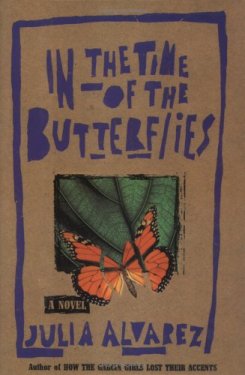
Ordinary Women as Agents of Social Change: The Mirabel Sisters - The Butterflies


In Carl Theodor Dreyer’s silent film The Passion of Joan of Arc (1928), Joan sits in her prison without helmet or sword.  The film portrays her as an ordinary young woman.  Dreyer humanizes her by filling the screen with close-ups of her face.  We see Joan wrestle under the pressure of the inquisition.  Her eyes show that she knows her path leads to being burned at the stake.  But, she maintains the conviction of her faith.  Stories have been written about heroic women such as Joan, but for the most part they come across as having super human qualities with helmets and swords unlike ordinary women.  The majority of women who have been agents of social change have been silenced because of this ordinariness

In the Time of Butterflies, Julia Alvarez writes a novel based on fictional events.  It is told through the different voices of the four Mirabal sisters (i.e., Patricia, Dedé, Minerva, and Maria Teresa) also known as Las Mariposas (The Butterflies).  Each sister tells their story of how they became involved in opposing the Dominican dictatorship of Rafael Trujillo (1930-1961). In the end of the book, Trujillo ordered the assassination for three of the sisters on November 25, 1960 alongside a mountain road between Puerta Plata and Santigo.  The outcome of their death and the continued voice of Dedé, their surviving sister ultimately led the Dominican people to overthrow Trujillo.  Alvarez goes beyond this historic event by providing stories about their childhood, sibling jealousy and personal dreams.  Her use of multiple narrators gives voice to each sister showing they were unique and ordinary women, but not a mythic figure.  

            Alvarez is deliberate in separating the sisters’ voices by using different points of view.  We are introduced to Dedé as she is being interviewed about her sisters.  Written in third person, her actions emphasized she wants time for herself away from being care taker of her family’s legacy and underground movement’s stories.   She is blunt to the interviewer saying: “What is it that you want to know” (7).  Dedé wants the interview to be quick, but knows it can’t be.  Patricia story is written in first person internal monologue.  She is the most religious of the sisters and her voice brings forth her struggle with God.  Patricia’s story moves towards her death, it becomes her confession to the readers and God.  Maria Teresa shares her story through her diaries.  The first diary, a First Communion present, is written from a nine/ten year point of view.  There are short paragraphs with unending sentences.  These beginning entries include drawings like her new shoes and sister’s swimming suit (36) and her later diaries contain bomb making diagrams (144) and the prison layout (229).  She keeps a diary while in college and again during her imprisonment as a political prisoner.  The entries writing style changes as she grows older.  Maria Teresa is chosen to be questioned by the Organization of American States Committee on Human Rights Abuse in prison.  Trujillo believes she will be silent in order to save her family members, but she secretly passes her journal writings to the interviewers (254).  Minerva, the most political sister, writes in a personal essay format.  The essays are given a title such as: “What do you want, Minerva Mirabal? Summer” (84) or “House Arrest” (257).  Together her essay collection feels like a personal memoir by sharing events that have influenced her.  Alvarez use different point of view emphasizes the sisters’ different personalities. 

            The novel portrays the sisters’ personal struggles between work and romance are similar to contemporary women.  Patricia and Dedé choose a more traditional path for women.  They marry after graduating from high school and begin having children.  Patricia is a farmer’s wife while Dedé helps run both her father’s and husband’s business using her financial skills.  Minerva is hesitant to get involved with men.  She initially believes that men will interfere with her dream of being a lawyer and her leadership position in the resistance.  However, she finds and marries a man who respects and encourages these qualities, whereas Dedé’s husband becomes more restrictive in what she does.  Maria Teresa follows Minerva’s path by going to college and being involved in the underground.  However, Minerva meets a certain man in the underground and she sets out to win his heart.  Both women have children, like their older sisters.  When Minerva and Maria Teresa are in prison it is Dedé who returns to help take care of her nieces and nephews.  Ultimately, it is her that becomes a mother for all 10 children following her sisters’ deaths.  Alvarez shows that the sisters struggles with defining motherhood and work isn’t any different from what modern women experience. 

The strength of the novel lies in the different reasons why each sisters chose to become agents of social change.  Minerva writes in her essay “Complications” about her friend Sinita.  Sinita describes the assassination of all the men in her family and how the convent school has allowed her to attend for free.  Minerva writes, “I was shaking by the time she was through” (17).  It’s the first time she hears that Trujillo was anything more than the beloved President.  It is through Maria Teresa’s dairy we learn that 18 year old Minerva and several classmates have been attending resistance meetings.  Maria Teresa questions her sister wanting to be involved in something so dangerous; Minerva replies: “She wanted me to grow up in a free country” (39).  Maria Teresa joined the summer following Minerva’s graduation from law school.  Maria Teresa had witness compounding events that Trujillo inflicted against her family.  Specifically, he had tried to make sexual advances towards Minerva.  The family’s response led to the imprisonment of their father and his death.  The event that pushed Maria Teresa was at Minerva’s graduation from law school.  Trujillo let Minerva study law, but did not give her the license to practice (138).  Patricia joined after witnessing a massacre by the guardias (national army) during a religious retreat.  Patricia saw herself as a mother in the eyes of God.  When she witnessed a young boy seeking sanctuary of the church being shot, she saw her own sons and all Dominican sons.  Patricia and her husband joined with their sons to fight justice in accordance to God’s laws along with many Dominican Catholic clergy.  Dedé was last to join.  The assassination of her sisters gave Dedé the strength to stand up against her husband and finally become involved in the “trouble Minerva and the others were cooking up” (149).  She stood by her sisters’ caskets and at each military stop she would shout “Assassins! Assassins!” (308).  She became vocal advocate to speak the truth against the Trujillo regime and now is the care taker of the stories for us to remember.  Alvarez reinforces through the sisters voices that there are many reasons how people find the courage to speak out against injustices.

The Mirabel sisters are viewed in the Dominican Republic as martyrs for freedom.  In the Time of Butterflies, Alvarez shows us four ordinary women who lived under a dictatorship and why they each chose not to accept the way things were.  She does this by humanizes them and having each sister share their stories as a sister, mother, wife and daughter.  As multiple narrators, they bring different perspectives of how to work towards justice and become closer to us.          


Reference:

Alvarez, Julia. In the Time of Butterflies.  1994. New York:Penguin Books, 1995. Print.

Harper, Rachel. “Rules of the relay race: Writing a novel with multiple narrators.” Spalding           University. Louisville, KY. 22 Nov. 2013. Fiction Lecture Fall Residency 2013.

Ink, Lynn Chun. “Remaking identify, unmaking nations: Historic recovery and the            reconstruction of community In the Time of Butterflies and The Farming of Bones.”    Callaloo. 27.3 (2004): 788-807. Web. 2 Dec. 2013.

“In the Time of Butterflies: Julia Alvarez.” Big Read. National Endowment of the Arts, 24 Nov. 2013. Web. 6 Dec. 2013.

The Passion of Joan of Arc. Dir. Carl Theodor Dreyer.  Société Gėnėrale, 1928. Film.